

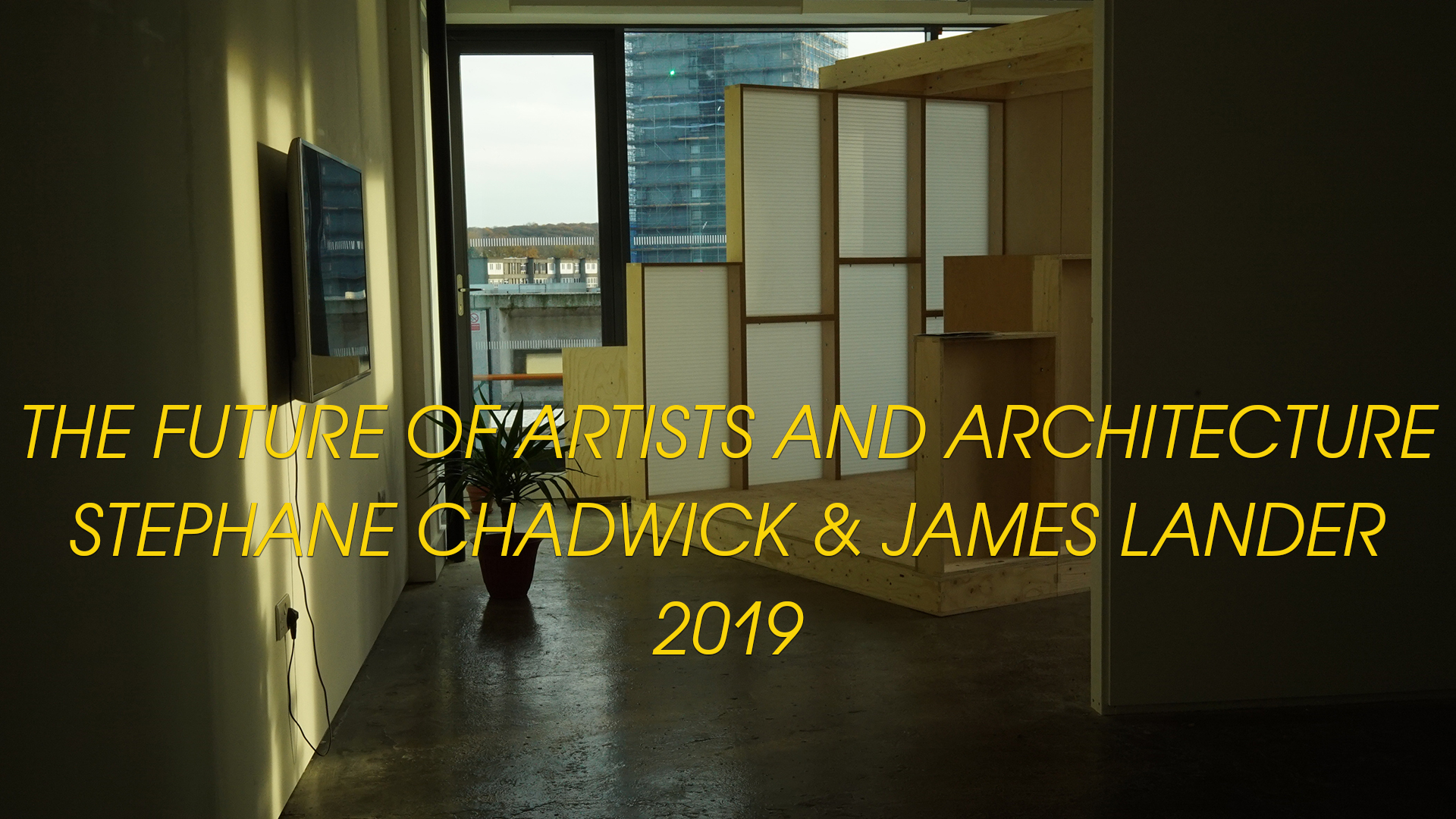
While the reputation of 20th century film director Stanley Kubrick is cemented with a retrospective exhibition at the Design Museum in London in 2019, the concrete housing blocks of Binsey Walk on the Thamesmead estate are raised to the ground. Although significant parts of the work of Greater London Council architects of the 1960s such as this, described by social researcher Dr Valerie Wigfall as ‘innovative in many respects’, (2009: 86) lie in ruin, the importance for Kubrick of its depiction in A Clockwork Orange, (1971) is revealed by Stephen Babish, adjunct Lecturer, DePaul University, to have belied its only appearing twice in the film. The author cites a hand-written list of scenes blocked out by length found inside the back cover of the director’s working copy of the screenplay. This includes ‘Thamesmead Fight’, singularly identified by both action and location. (2018: 210)
The action continues in Thamesmead to this day, under the partial demolition order of its latest owner the Peabody Group. Who also manage Parnell House, built in 1849, listed by Historic England as ‘the earliest surviving example of flats to provide accommodation for the “deserving poor” in regular employment’ (2006) and ironically still standing today in Streatham Street, Camden, London. At a time when architecture, more especially public housing, is coming under ever more scrutiny, from specialist and non-specialist alike. Take for example a recent walking tour of South Thamesmead led by modernist architecture enthusiast Thaddeus Zupancic, in association with the Twentieth Century Society, during Open House London. For which the Lakeside Centre at Thamesmead also opened its doors to the public, newly restored as artists’ studios. (2019) What might the legacy of artists who moved to Thamesmead in 2018 be?
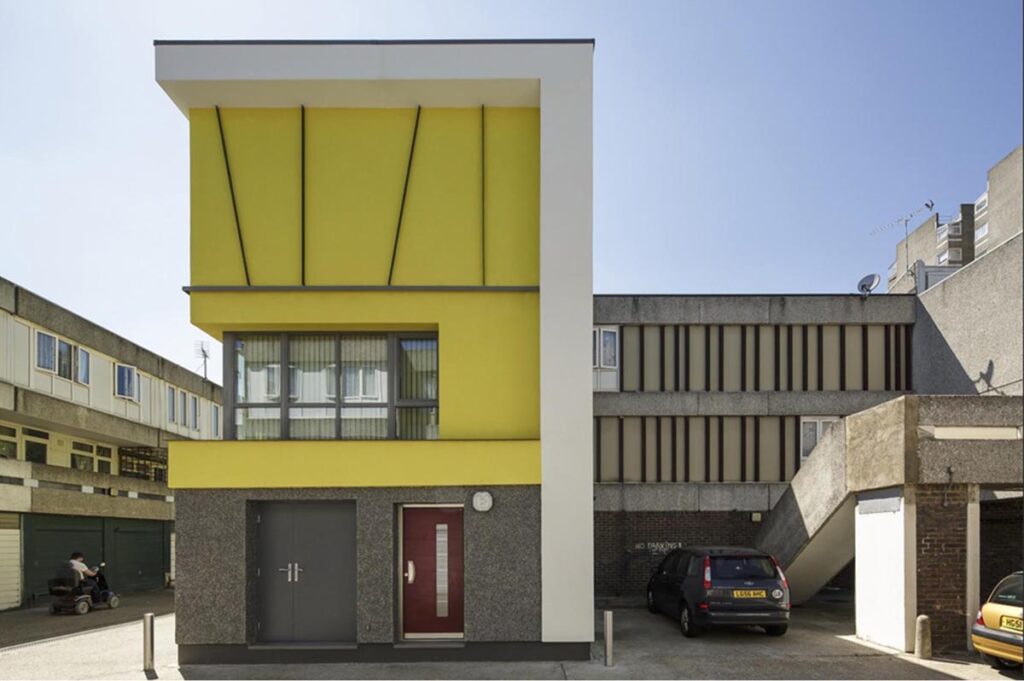
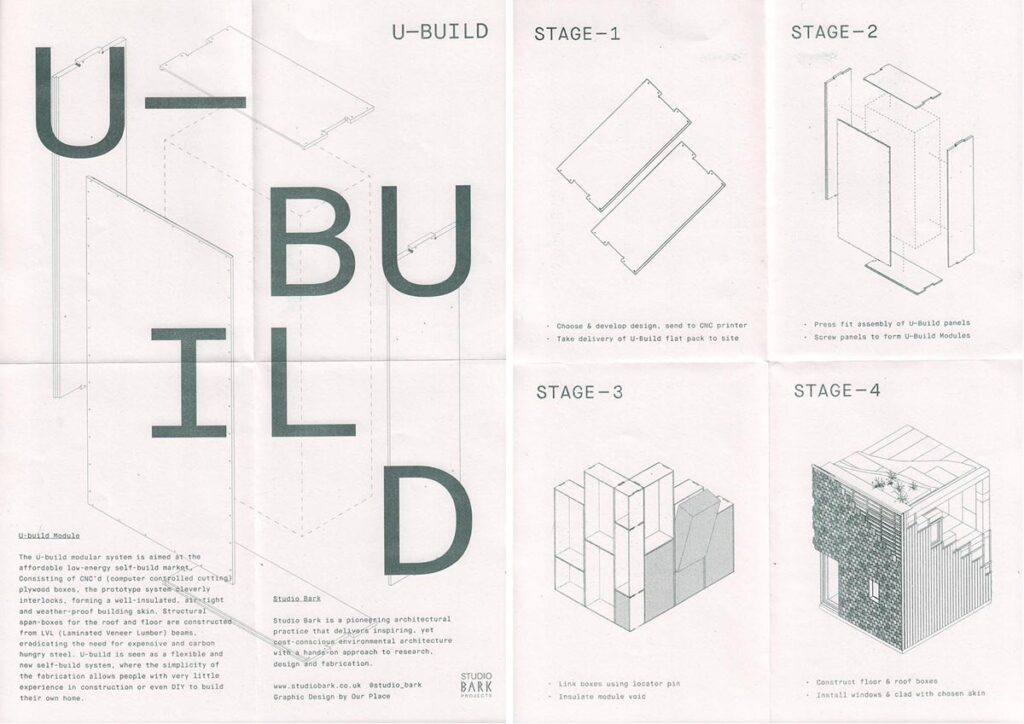
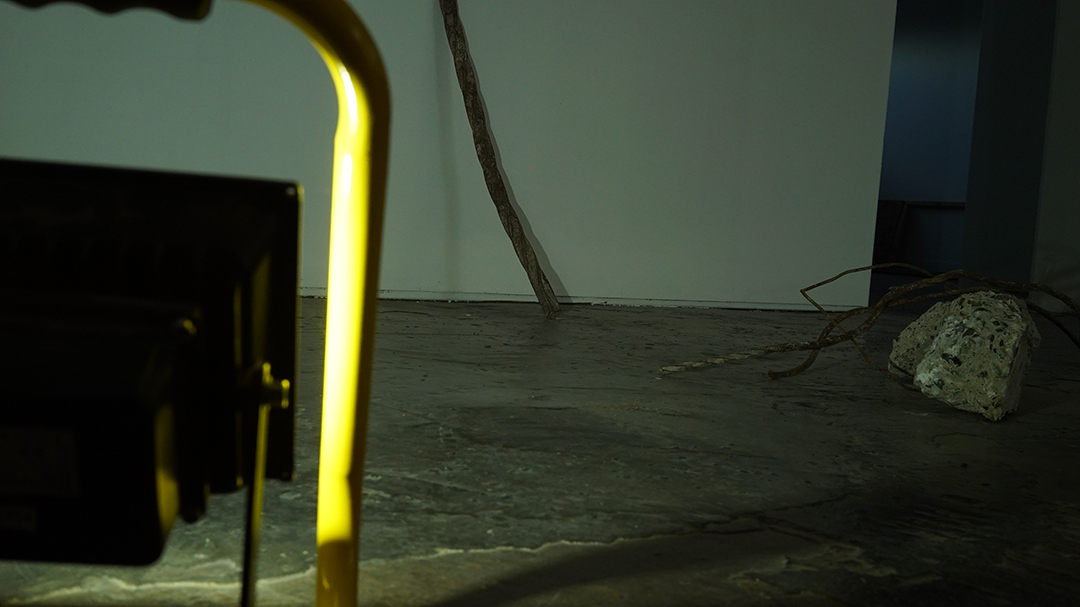
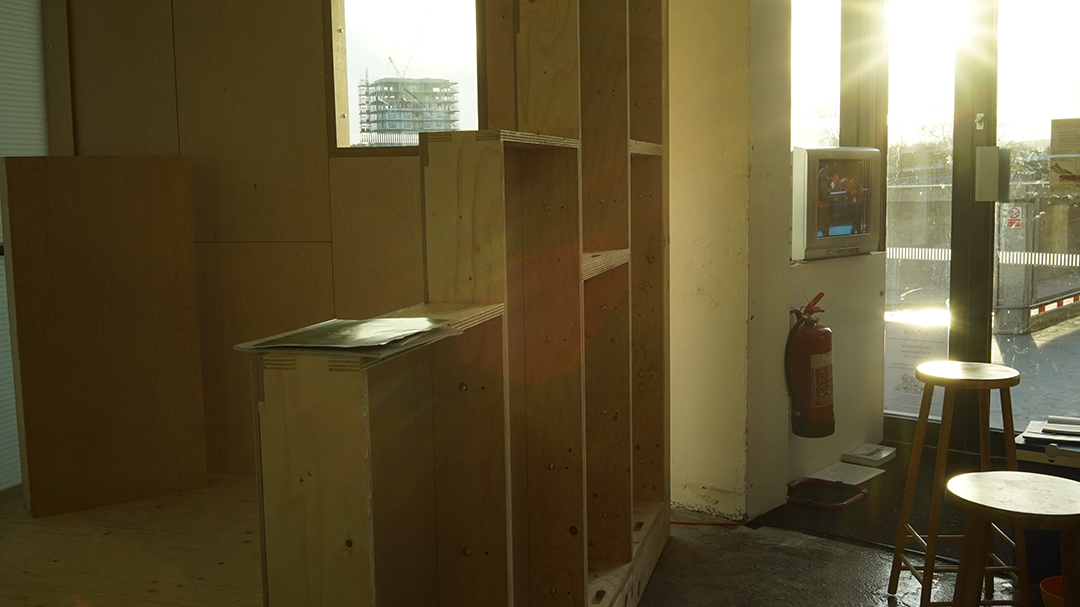
This exhibition does not seek to tell the story of Binsey Walk, or of Thamesmead. Instead it invites more voices to join a conversation initiated by Liam and Vanessa Scully (under the proposition Thamesmead Texas) to which Stephane Chadwick and James Lander respond with U-Build and Yellow House 55.
Curated by Scully & Scully. Part of Art Licks Weekend 2019. Funded by Bow Arts Trust.
WORKS CITED
A Clockwork Orange. (1971), [film], Stanley Kubrick, London.
Babish, S. (2018), ‘A place in London’s future: A Clockwork Orange, Thamesmead and the urban dystopia of the modernist large scale plan’, Screen. vol. 59. iss 2. 197-212.
Historic England, (2019), Thamesmead – City of London, Historic England [website], 23 November 2006. https://www.historicengland.org.uk/services-skills/education/educational-images/parnell-house-streatham-street-camden-town-9433 (Accessed 1 September).
Lakeside Centre. (2019), Open House London [website], 1 August 2019. https://openhouselondon.open-city.org.uk/listings/4547 (Accessed 16 September 2019).
Thamesmead Information Hub. (2019), Open House London [website], 1 August 2019.
https://openhouselondon.open-city.org.uk/listings/7534 (Accessed 16 September 2019).
Wigfall, V. (2008), Thamesmead: a social history. London: Greenwich Community College Press.


STEPHANE CHADWICK – Director Studio Bark, London. BArch(Hons) DipArch
Steph previously worked in London for an award winning practice gaining experience on a number of projects ranging from large mixed use developments to small, bespoke refurbishments. He also gained experience working on a number of small scale construction projects, and still enjoys getting his hands dirty during the Bark Live Build projects. In the Studio he is interested in finding new solutions to everyday problems, creating unique designs with a strong environmental focus. Steph has a passion for the craft and detail in architecture and is a strong advocate of designing through making. Steph studied at the Mackintosh School of Architecture and London Metropolitan University.
JAMES LANDER – Artist, Researcher, Teacher, London
James completed a PhD by-practice at the University of the Arts London in 2019. His thesis relocated the site of contest from the storeys of Ernö Goldfinger’s Balfron Tower, where he lived for four years before it was privatised, to the stories kept public in the archives. These include his unofficial archive, fragments of which were shown at Tower Hamlets Local History Library & Archives, as part of the London Festival of Architecture in 2018. The accompanying catalogue ‘Balfron Tower: Archiving Fragments’ and book ‘Walking Between Streets in the Sky’ published in 2017, convene a non-specialist community. His activism as a non-specialist advocates for and promotes public access to modern architecture.